ISO Certification Cost in India 2027 Fees Audit Charges and Complete Breakdown
03 Nov 2026
Introduction: How Much Does ISO Certification Cost in India in 2027?
Getting ISO certified is an important step for businesses that want to improve their operations, build customer confidence and compete for larger business opportunities. Whether you operate a manufacturing unit, IT company, food processing business, hospital, consultancy firm or startup, ISO certification can help establish a more organized management system.
However, one common question business owners ask is: What is the ISO certification cost in India in 2027?
The answer depends on several factors, including the selected ISO standard, number of employees, business activities, operational locations and certification audit requirements.
For a small business with approximately 10–25 employees and one location, an indicative initial budget may range from ₹30,000 to ₹1,00,000 for commonly selected management system standards. Specialized certifications can cost more.
There is no single government-prescribed ISO registration fee. ISO develops international standards but does not issue certificates or set certification prices. Certification bodies determine their charges according to the applicable certification requirements.
Let's understand the complete cost breakdown before you apply.
ISO Certification Cost in India 2027: Standard-Wise Fee Breakdown
The following table provides indicative market estimates for small organizations with straightforward operations and a single business location.
| ISO Standard | Estimated Initial Cost |
|---|---|
| ISO 9001 (Quality Management) | ₹30,000–₹75,000 |
| ISO 14001 (Environmental Management) | ₹30,000–₹85,000 |
| ISO 45001 (Occupational Health & Safety) | ₹30,000–₹85,000 |
| ISO 27001 (Information Security) | ₹50,000–₹1,35,000 |
| ISO 22000 (Food Safety Management) | ₹40,000–₹95,000 |
| ISO 20000-1 (IT Service Management) | ₹50,000–₹1,25,000 |
| ISO 13485 (Medical Devices) | ₹70,000–₹1,80,000 |
Important: These are indicative budgeting ranges, not official 2027 tariffs or guaranteed quotations. Actual charges may vary by certification body, audit duration, accreditation, company size and scope. Confirm the applicable standard edition and certification arrangements before budgeting.
What Is Included in ISO Certification Fees?
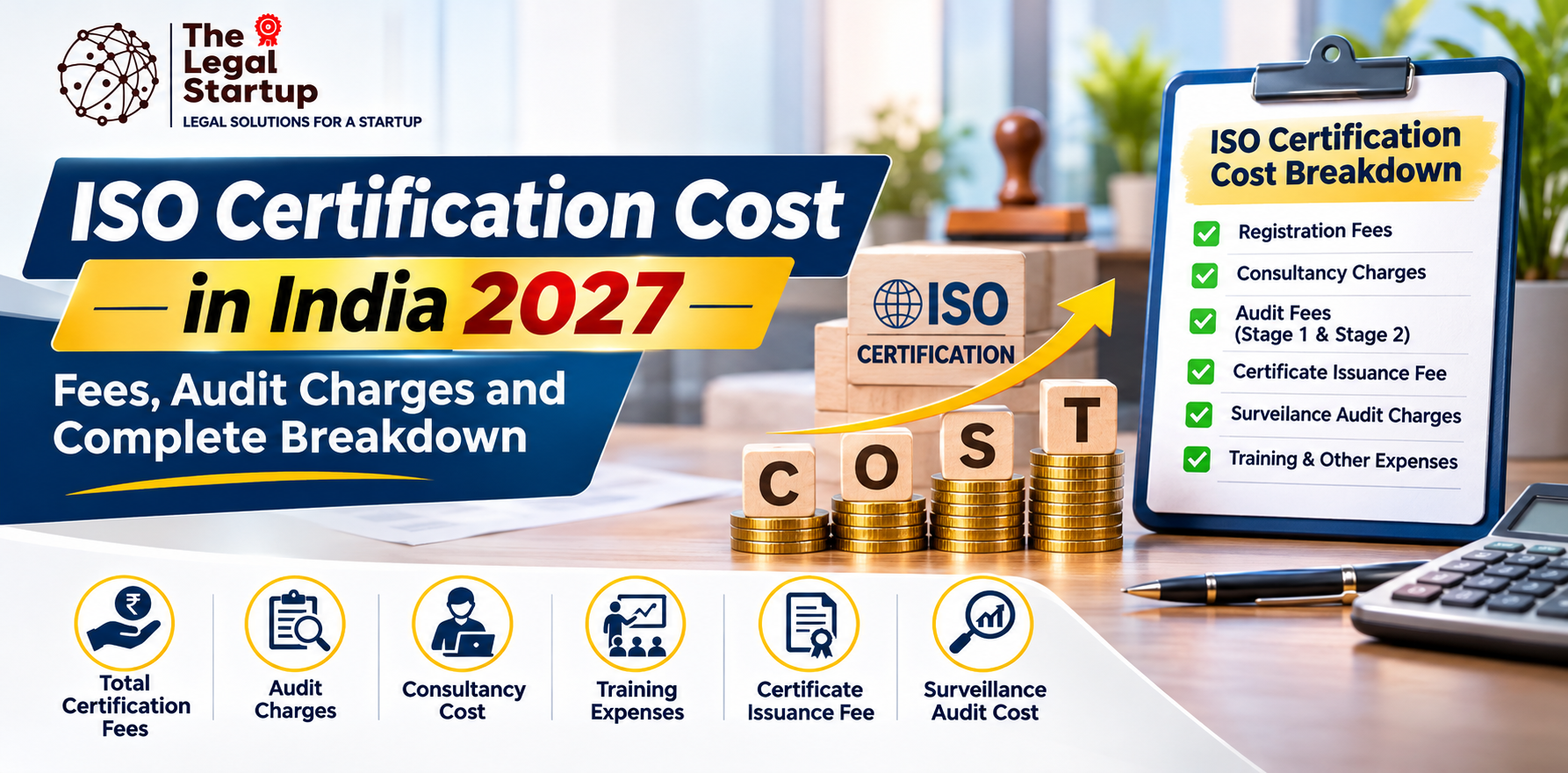
The overall ISO certification cost generally consists of the following expenses:
1. Documentation and Implementation Charges
Businesses may need assistance preparing policies, procedures, quality objectives, risk assessments and operational records. Consultancy charges depend on how much preparation is required.
2. Certification Audit Fees
The certification body charges for assessing the management system. This commonly includes Stage 1 and Stage 2 audits.
3. Certificate Issuance Charges
After successful assessment and the certification decision, applicable certificate issuance and administration charges may be included in the quotation.
4. Employee Training Charges
Employees may require awareness training to understand their responsibilities under the selected ISO standard.
5. Surveillance Audit Charges
Certification requires ongoing monitoring. Businesses should budget for surveillance audits during the certification cycle.
6. Travel and Additional Expenses
If auditors need to travel to a business location, transportation, accommodation and other agreed expenses may increase the overall cost.
Factors That Affect ISO Certification Cost in India
Not every business pays the same ISO certification fee. The following factors influence the final quotation.
1. Type of ISO Standard
ISO 9001 certification generally involves quality management, while ISO 27001 involves information security risks and controls. Specialized requirements can increase implementation and audit expenses.
2. Number of Employees
A manufacturing company with 100 employees may require more audit time than a small consultancy with 10 employees because of differences in processes and operational complexity.
3. Business Location and Number of Sites
A company operating multiple factories, warehouses or offices may require additional audit coverage.
4. Existing Documentation
Businesses with established procedures and records may need less preparation than organizations starting from scratch.
5. Certification Body and Accreditation
The certification body's competence, accreditation status, audit arrangements and commercial pricing also influence the cost.
For example, an MSME in Delhi with a single manufacturing unit may have a different certification budget from a pharmaceutical manufacturer operating multiple facilities.
Key Benefits of ISO Certification for Indian Businesses
ISO certification is not simply a certificate to display on your office wall. When properly implemented, it can support long-term business improvement.
-
Improved business credibility: Demonstrates that your management system has been assessed against a recognized international standard.
-
Better operational efficiency: Helps establish consistent processes and responsibilities.
-
Customer confidence: Gives customers and business partners greater confidence in your management practices.
-
Tender and vendor eligibility: Helps meet ISO-related requirements specified in certain tenders and corporate contracts.
-
Risk management: Encourages businesses to identify operational risks and take preventive action.
-
Export opportunities: Can support supplier evaluations and international business relationships where relevant certification is requested.
-
Continuous improvement: Encourages regular monitoring, internal audits and corrective actions.
Step-by-Step ISO Certification Process in India
Getting ISO certified involves preparation, implementation and an independent certification assessment.
Step 1: Select the Right ISO Standard
Identify the standard that matches your business activities.
For example:
-
ISO 9001 for manufacturing and service businesses.
-
ISO 14001 for environmental management.
-
ISO 27001 for information security.
-
ISO 45001 for occupational health and safety.
-
ISO 22000 for food safety management.
Step 2: Conduct a Gap Assessment
Review your existing business practices and identify areas that need improvement to meet the selected standard.
Step 3: Prepare Required Documentation
Prepare the relevant policies, procedures, process records, risk assessments and other documented information.
Step 4: Implement the Management System
Put the documented processes into practice. Train employees and ensure that responsibilities are clearly understood.
Step 5: Conduct an Internal Audit
Evaluate whether the management system is working effectively. Identify nonconformities and take corrective action.
Step 6: Complete the External Certification Audit
An independent certification body conducts the required assessment. The audit generally involves Stage 1 and Stage 2 activities.
Step 7: Certification Decision and Issuance
The certification body reviews the audit findings and corrective action evidence before deciding whether certification can be granted.
After successful certification, the organization must maintain its management system and complete applicable surveillance audits.
Documents Required for ISO Certification
The exact documentation depends on the ISO standard and business activities. Commonly requested documents include:
-
Business registration certificate or other applicable registration proof.
-
PAN details of the organization.
-
Company address proof.
-
Company profile and business activity description.
-
Organization chart and employee details.
-
Details of the proposed certification scope.
-
Relevant policies and procedures.
-
Operational records and work instructions, where applicable.
-
Employee training and competency records.
-
Risk assessment documents, where required.
-
Internal audit reports.
-
Management review records.
-
Corrective action records.
For example, a food processing company may require food safety procedures and hazard control records, whereas an IT company pursuing ISO 27001 may need information security policies, asset inventories and risk assessment records.
Why Choose The Legal Startup for ISO Certification Assistance?
Choosing the right guidance can make your ISO certification journey more organized and easier to manage.
The Legal Startup assists startups, MSMEs and established businesses in understanding their ISO requirements and preparing for the certification process.
Our support focuses on:
-
Standard selection guidance: Understand which ISO standard is appropriate for your business.
-
Documentation assistance: Get guidance on preparing relevant policies, procedures and records.
-
Gap assessment support: Identify areas that require attention before the certification audit.
-
Implementation guidance: Understand how to establish and maintain the required management system.
-
Audit preparation: Get assistance in understanding the certification audit stages and documentation requirements.
-
Transparent cost guidance: Understand the proposed service charges, audit expenses and other applicable costs before proceeding.
Our objective is to help businesses approach certification with clarity, proper preparation and an understanding of their responsibilities.
Certification is granted only by the independent certification body after successful assessment. Businesses should verify the certification body's competence and relevant accreditation before proceeding.
Frequently Asked Questions (FAQs)
1. What is the ISO certification cost in India in 2027?
The indicative initial cost for a small, single-location business may range from ₹30,000 to ₹1,00,000 for commonly selected standards. Specialized standards, larger organizations and complex operations may cost more.
2. Is ISO certification free for MSMEs in India?
ISO certification is not automatically free for every MSME. Some government schemes may offer financial assistance for eligible enterprises under specific conditions. Businesses should check the current scheme guidelines and eligibility requirements before applying.
3. What is the ISO 9001 certification cost for small businesses?
For a small organization with approximately 10–25 employees and one location, an indicative initial budget is ₹30,000–₹75,000. The actual amount depends on documentation requirements, audit fees and certification arrangements.
4. How long does it take to get ISO certification in India?
The timeline depends on business readiness, the selected standard, documentation, implementation and audit scheduling. A straightforward business may complete the process in a few weeks, while complex organizations may need longer. Certification should never be treated as guaranteed within a fixed number of days.
5. Are annual audit charges included in the ISO certification fee?
Not necessarily. Initial certification quotations may exclude future surveillance audit charges. Organizations should ask for a complete three-year cost estimate, including initial certification, surveillance and recertification expenses.
Conclusion: Get an Affordable ISO Certification Quote in India for 2027
Understanding the ISO certification cost in India in 2027 helps businesses plan their budgets and select the right certification approach. The actual investment depends on the standard, business size, operational complexity, audit requirements and certification body.
Instead of choosing a provider based only on the lowest advertised price, compare the complete quotation, documentation support, audit charges and certification credentials.
Whether you are a startup, MSME, manufacturer, exporter or service provider, The Legal Startup can help you understand the requirements and prepare for your ISO certification journey.
Contact The Legal Startup Today
Get professional guidance on ISO certification requirements, documentation and applicable costs.
Email: info@thelegalstartup.com
Website: https://www.thelegalstartup.com/
Contact our team with your business name, location, number of employees and preferred ISO standard to discuss your requirements and request a cost estimate for 2027.
Build business credibility. Improve your processes. Take the next step towards ISO certification with The Legal Startup.