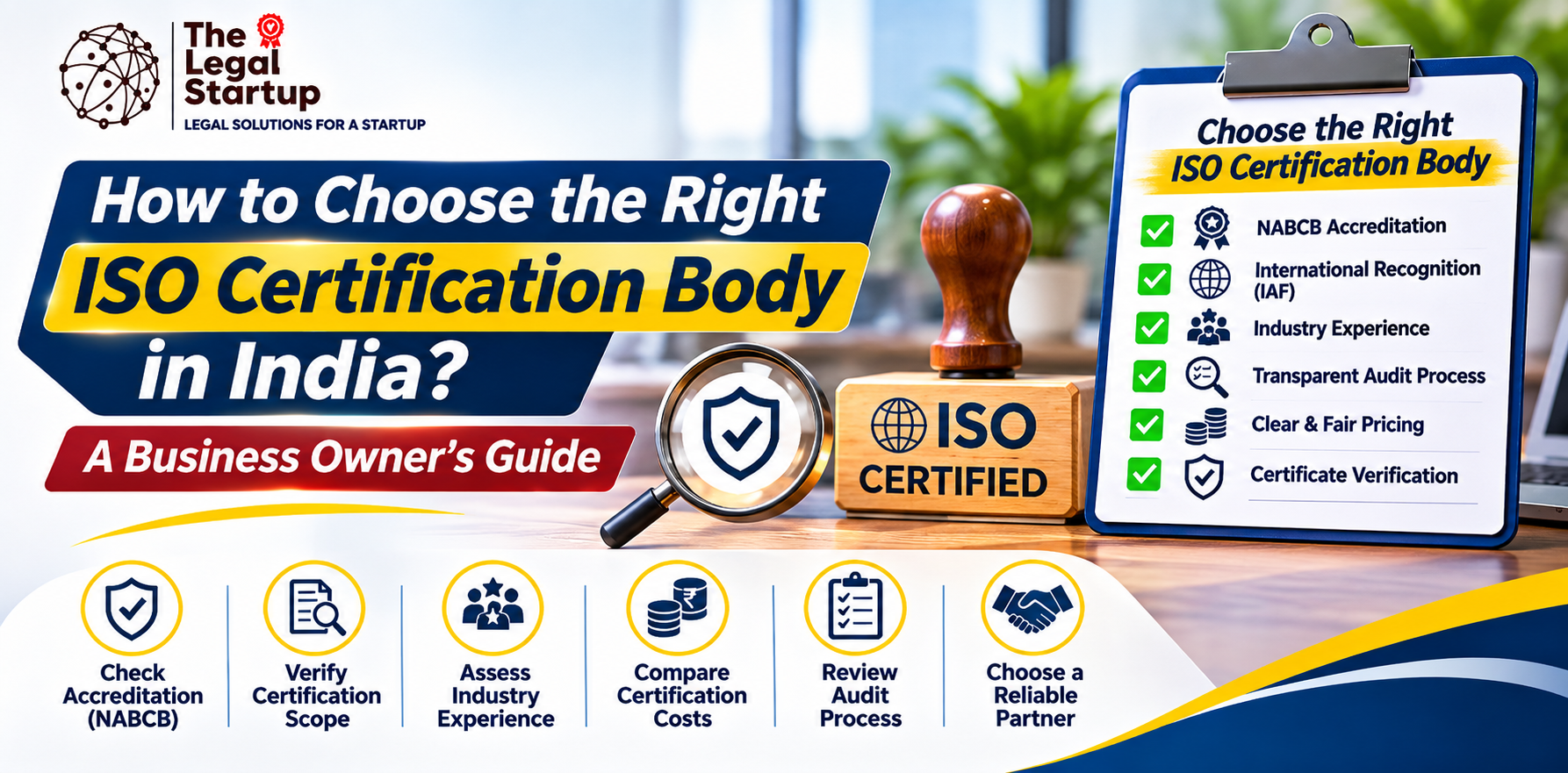
How to Choose the Right ISO Certification Body in India A Business Owners Guide
07 Nov 2026
Introduction: Why Choosing the Right ISO Certification Body Matters
Getting ISO certified is an important decision for any business. It can improve customer confidence, strengthen business processes and help organizations meet supplier or government tender requirements.
However, obtaining a certificate is only one part of the process. Choosing the right ISO certification body is equally important.
Many Indian business owners select a certification provider based only on price or promises of quick certificate issuance. This can create problems later, particularly when customers, government departments or international buyers ask for certificate verification.
For example, imagine a manufacturing company in Delhi receives a large corporate order. The buyer asks for an ISO 9001 certificate issued by a recognized certification body. If the certificate's accreditation or scope cannot be verified, the company may face difficulties during supplier approval.
So, how do you choose the right ISO certification body in India?
You should evaluate accreditation, technical competence, audit procedures, industry experience, certificate verification facilities and overall transparency before making a decision.
This guide explains the important factors every business owner should consider.
What Is an ISO Certification Body?
An ISO certification body is an independent organization that audits a company's management system against the requirements of a particular ISO standard.
If the organization successfully meets the applicable requirements, the certification body can issue a certificate within its authorized certification scope.
For example:
-
ISO 9001 certification evaluates a Quality Management System.
-
ISO 14001 certification evaluates an Environmental Management System.
-
ISO 45001 certification evaluates an Occupational Health and Safety Management System.
-
ISO 27001 certification evaluates an Information Security Management System.
-
ISO 22000 certification evaluates a Food Safety Management System.
It is important to understand three different roles:
ISO: Develops international standards but does not issue ISO certificates.
Accreditation body: Independently assesses the competence of certification bodies against applicable accreditation requirements.
Certification body: Conducts certification audits and makes certification decisions.
An ISO consultant, on the other hand, helps businesses prepare and implement their management systems. Consultancy and independent certification are different activities and should maintain appropriate impartiality.
7 Important Factors to Consider When Choosing an ISO Certification Body in India
Before selecting an ISO certification agency, carefully evaluate the following points.
1. Check NABCB Accreditation
One of the first things to check is whether the certification body has relevant accreditation.
In India, the National Accreditation Board for Certification Bodies (NABCB), under the Quality Council of India, accredits management system certification bodies.
NABCB assesses certification bodies against applicable international requirements, including ISO/IEC 17021-1.
Before proceeding, verify:
-
Whether the certification body appears in the official NABCB directory.
-
Whether its accreditation is currently valid.
-
Whether accreditation covers your required ISO standard.
-
Whether the relevant certification scope is covered.
You can check the official directory here:
https://nabcb.qci.org.in/management-system-certification/
Remember that accreditation is an important credibility indicator, but you must verify its actual scope rather than relying only on a logo displayed on a website.
2. Verify International Recognition and Accreditation
If your business works with international customers or plans to export, recognition arrangements can be particularly important.
Check whether the accreditation body is covered by the relevant international recognition arrangements and whether those arrangements cover your selected certification scheme.
NABCB provides information about its international recognition arrangements.
You should also check the current status of the accreditation body and its recognition framework rather than relying on outdated claims such as an old IAF membership logo.
3. Check Experience in Your Industry
Not every certification audit requires the same technical knowledge.
A pharmaceutical manufacturer, IT company and food processing business have different operational risks and management system requirements.
For example:
-
A food manufacturer needs an auditor familiar with food safety management.
-
An IT company pursuing ISO 27001 needs an assessment of information security controls.
-
A manufacturing unit pursuing ISO 9001 needs an auditor who understands production and quality management processes.
Choose a certification body that can demonstrate appropriate auditor competence for your industry and certification scope.
4. Understand the Certification Audit Process
A reliable certification body follows a structured and independent audit process.
For management system certification, the initial assessment generally involves two stages:
Stage 1 Audit: Reviews the organization's documented management system, scope and readiness for the main audit.
Stage 2 Audit: Evaluates whether the management system has been implemented effectively and meets the applicable standard requirements.
The certification body reviews audit findings and corrective actions before making its certification decision.
Avoid providers promising guaranteed certification without a proper audit.
5. Compare Certification Costs and Transparency
ISO certification costs vary according to the standard, number of employees, operational locations, complexity and audit duration.
Before selecting a certification body, request a detailed quotation covering:
-
Initial certification audit charges.
-
Stage 1 and Stage 2 audit expenses.
-
Certificate issuance charges.
-
Auditor travel expenses, where applicable.
-
Surveillance audit charges.
-
Recertification costs.
-
Any additional administrative fees.
Do not select a provider simply because it offers the lowest price. A transparent quotation and a credible audit process are more important for long-term business value.
6. Check Certificate Verification Facilities
A certificate should be capable of verification through appropriate channels.
Ask the certification body how customers and business partners can confirm the certificate's authenticity and current status.
You can also explore the global accredited management system certification database:
https://www.iaf-certsearch.org/
Check the current database arrangements and coverage. A certificate not appearing in a database does not automatically establish that it is invalid; contact the certification body and relevant accreditation body for confirmation.
7. Review Communication and Customer Support
Certification involves several activities, from application and audit scheduling to corrective actions and certificate maintenance.
A professional certification body should clearly communicate:
-
Certification requirements.
-
Audit dates and arrangements.
-
Nonconformities identified during assessment.
-
Corrective action requirements.
-
Certification decisions.
-
Surveillance and recertification schedules.
Good communication helps businesses prepare properly and avoid unnecessary delays.
Key Benefits of Choosing the Right ISO Certification Body
Selecting a competent certification body offers several advantages beyond receiving an ISO certificate.
1. Greater Business Credibility
A properly assessed and verifiable certificate can improve confidence among customers, suppliers and corporate buyers.
2. Better Acceptance in Business Transactions
Where buyers or tenders specify accredited certification, choosing an appropriately accredited certification body helps meet those requirements.
3. Reliable Audit Assessment
Competent auditors evaluate your actual management system instead of treating certification as a documentation exercise.
4. International Business Opportunities
Relevant accreditation and recognition arrangements can support the acceptance of management system certification across international supply chains.
5. Reduced Risk of Certification Problems
Verifying accreditation, scope and certification arrangements helps reduce the risk of choosing an unsuitable provider.
6. Long-Term Certification Support
A professional certification arrangement includes proper surveillance, renewal and communication throughout the certification cycle.
Step-by-Step Process to Get ISO Certified in India
After selecting a suitable certification body, follow these steps.
Step 1: Identify the Appropriate ISO Standard
Choose the standard according to your business activities and requirements.
For example, a manufacturer may select ISO 9001, while an IT service provider may consider ISO 27001 or ISO 20000-1.
Step 2: Select a Suitable Certification Body
Verify its accreditation, technical competence, scope and commercial terms.
Step 3: Conduct a Gap Assessment
Review existing business practices and identify areas that need improvement.
Step 4: Prepare Required Documentation
Develop the necessary policies, procedures, risk assessments and operational records.
Step 5: Implement the Management System
Train employees and ensure that documented procedures are followed in daily operations.
Step 6: Complete Internal Audit and External Assessment
Conduct an internal audit before the certification body's Stage 1 and Stage 2 assessment.
Address any identified nonconformities.
Step 7: Certification Decision and Issuance
After reviewing the audit results and corrective actions, the certification body makes its certification decision.
Following successful certification, maintain the system and complete applicable surveillance audits.
Documents Required for ISO Certification
The documents required depend on the selected ISO standard and the organization's activities.
Commonly requested documents include:
-
Company registration certificate or applicable business registration proof.
-
PAN details.
-
Business address proof.
-
Company profile.
-
Employee details and organization chart.
-
Business activity and certification scope.
-
Relevant management policies.
-
Procedures and operational records.
-
Employee training records.
-
Risk assessment documents, where applicable.
-
Internal audit reports.
-
Management review records.
-
Corrective action records.
For example, a manufacturing company applying for ISO 9001 may need production and inspection records, while an IT company applying for ISO 27001 may need information security policies and risk assessment documentation.
Why Choose The Legal Startup for ISO Certification Assistance?
Selecting the right ISO certification route can be confusing, particularly for startups and MSMEs that are applying for the first time.
The Legal Startup helps Indian businesses understand applicable ISO standards, documentation requirements and certification procedures.
Our assistance focuses on:
-
ISO standard selection: Understand which standard is suitable for your business.
-
Documentation assistance: Get guidance on preparing the required management system documents.
-
Gap assessment support: Identify areas that need improvement before certification.
-
Implementation guidance: Understand how to establish and maintain the management system.
-
Audit preparation: Prepare for the certification assessment with greater clarity.
-
Cost guidance: Understand applicable consultancy, audit and certification expenses.
We believe businesses should understand the certification process before making an investment.
Our objective is to help you make an informed decision and approach ISO certification with proper preparation.
The final certification decision is made by the independent certification body after the required assessment. The Legal Startup's consultancy assistance should not be confused with accreditation or independent certification.
Frequently Asked Questions (FAQs)
1. How do I choose the right ISO certification body in India?
Check the certification body's accreditation, applicable certification scope, auditor competence, industry experience, audit process, certificate verification facilities and transparent pricing before making your decision.
2. How can I verify whether an ISO certification body is NABCB accredited?
Visit the official NABCB website and check its management system certification directory. Verify the certification body's name, current accreditation status and the specific ISO standard covered by its accreditation.
3. Is NABCB accreditation necessary for every ISO certification body in India?
NABCB accreditation is not universally compulsory for every certification body. However, accredited certification is often preferred or specifically required by customers and procurement conditions. Always verify the accreditation and recognition requirements relevant to your business.
4. What is the difference between an ISO consultant and a certification body?
An ISO consultant helps an organization prepare documentation and implement its management system. A certification body independently audits the system and makes the certification decision. These are separate responsibilities requiring appropriate impartiality.
5. How much does it cost to get ISO certification in India?
The cost depends on the ISO standard, employee strength, operational locations, audit duration and certification body. Small businesses may have lower certification expenses than large or complex organizations. Always request a complete quotation covering initial and ongoing audit charges.
Conclusion: Make the Right Choice for Your Business Certification
Choosing the right ISO certification body in India is an important step towards obtaining a credible and useful management system certification.
Instead of focusing only on the lowest quotation or fastest certificate issuance, evaluate accreditation, audit competence, industry experience, certification scope and verification facilities.
A properly selected certification body helps ensure that your management system is assessed through a structured and independent process.
Whether you are a startup, MSME, manufacturer, exporter or service provider, The Legal Startup can help you understand your ISO requirements and prepare for the certification journey.
Need Professional Guidance for ISO Certification?
Connect with The Legal Startup to understand the appropriate ISO standard, documentation requirements, certification process and applicable costs.
Email: info@thelegalstartup.com
Website: https://www.thelegalstartup.com/
Share your business activity, location and preferred ISO standard with our team to discuss your certification requirements.
Choose the right certification path. Build business credibility. Move forward with confidence with The Legal Startup.